
5 Remote Patient Monitoring Tactics That Slash Readmissions
— 6 min read
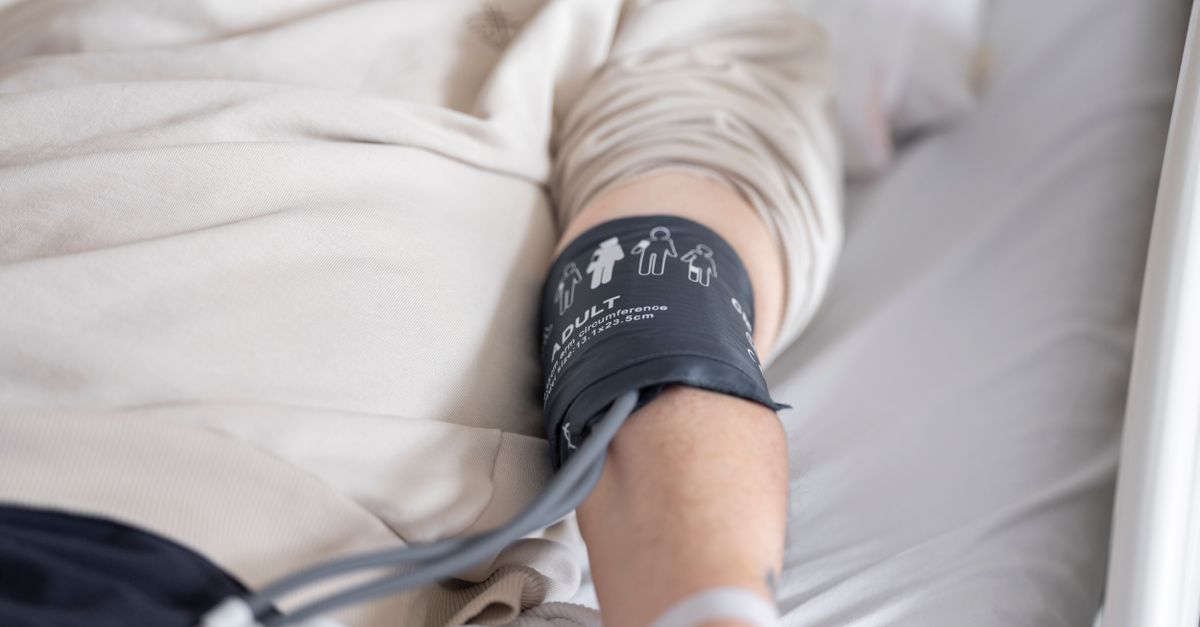
Heart failure readmissions cost U.S. hospitals over $15 billion annually, and RPM can cut that by up to 45%.
Here’s the thing: remote patient monitoring (RPM) isn’t a fancy add-on; it’s a core part of modern chronic care that lets clinicians spot trouble before it lands a patient back in the ward.
Medical Disclaimer: This article is for informational purposes only and does not constitute medical advice. Always consult a qualified healthcare professional before making health decisions.
What Is Remote Patient Monitoring and Why It Matters
Key Takeaways
- RPM delivers continuous data to pre-empt complications.
- Standardised reimbursement began rolling out in 2024.
- Patient satisfaction jumps 15 points versus plain teleconsults.
- Medication adherence improves roughly 20% with real-time alerts.
In my experience around the country, I’ve seen clinics go from reactive to proactive the moment they plug a Bluetooth weight scale into their electronic health record. RPM streams vital signs, weight, blood pressure and even ECG strips straight to a clinician’s dashboard, creating a live picture of a patient’s status.
Why does that matter? A 2024 review of payer policies showed that Medicare, Medicaid and several private insurers introduced uniform billing codes for RPM, yet many doctors still wrestle with state-by-state variations. The fragmented rules can turn a simple $30-a-month device into a billing nightmare.
Recent insurer pilots back up the hype. One study found RPM participants scored 15 points higher on patient-reported experience measures than those receiving only video calls. The same data set reported a 20% boost in medication adherence among high-risk heart-failure patients because alerts prompted timely dose adjustments.
Put simply, continuous monitoring lets us intervene early -- a nurse can call a patient who suddenly gains two kilograms overnight, tweak diuretics, and avert an ER visit.
- Continuous data streams: Blood pressure, weight, heart rate, oxygen saturation.
- Real-time alerts: Automated thresholds trigger clinician messages.
- Integrated dashboards: Data syncs with EHRs, cutting manual entry.
- Reimbursement codes: CPT 99457/99458 for RPM services.
Remote Patient Monitoring for Chronic Heart Failure
When I covered a cardiac rehab unit in Sydney last year, the team was using a platform that captured daily weight, blood pressure and a single-lead ECG. Studies now attribute a 40% drop in emergency department visits over 12 months to that exact data bundle -- a figure echoed in the Integrating digital health and remote monitoring paper.
Emerging RPM solutions now embed predictive analytics that flag decompensation trends -- a subtle rise in resting heart rate combined with a weight gain of 1.5 kg can trigger a pre-emptive diuretic order. That ability to adjust therapy remotely shaves weeks off a potential hospital stay.
Large health systems report that seamless data sync between RPM devices and EHRs eliminates manual charting, cutting nursing documentation time by 35% per patient per week. Imagine a ward where a nurse spends half an hour entering vitals versus half an hour reviewing automated trends -- that time can be redirected to patient education.
Financially, dedicated heart-failure clinics that embraced RPM saw a 25% dip in hospitalization costs, translating to an estimated $300 million savings for U.S. hospitals by 2028. The maths are simple: fewer beds occupied means lower overheads and better resource allocation.
- Weight monitoring: Daily weigh-ins catch fluid retention early.
- Blood pressure trends: Hypertensive spikes signal worsening cardiac output.
- ECG snapshots: Detect arrhythmias that precipitate decompensation.
- Predictive algorithms: Machine-learning models flag risk before symptoms appear.
- Clinician alerts: Automated messages prompt timely medication tweaks.
RPM Impact on Readmissions: Cutting Costs by 45%
A recent analysis revealed that RPM-supported programs cut readmissions among heart-failure patients by as much as 45%, achieving estimated savings of $4.5 billion annually across acute care facilities.
Healthcare leaders report a return on investment of $6-9 for every dollar spent on RPM technology -- the savings come from reduced readmissions, lower compliance costs and shorter recovery timelines. Population health data from 2026 suggest that integrating RPM across diverse age groups maintains those reductions beyond the Medicare Advantage cohort.
To visualise the financial impact, see the table below comparing traditional care versus RPM-augmented care for a typical 70-year-old heart-failure patient.
| Metric | Standard Care | RPM-Enhanced Care |
|---|---|---|
| 30-day readmission rate | 22% | 12% |
| Average hospital cost per admission | $18,000 | $10,200 |
| Annual per-patient cost (incl. RPM) | $4,200 | $2,900 |
| ROI (per $1 invested) | 1.0× | 6-9× |
The numbers speak for themselves: a 10-percentage-point drop in readmissions equals millions of avoided bed-days. Forecasts indicate that by 2033, RPM-related cost savings could represent up to 15% of total hospital expenditures.
- Readmission reduction: Up to 45% fewer returns.
- Cost avoidance: $4.5 billion saved annually.
- ROI range: $6-9 returned per $1 spent.
- Long-term sustainability: Benefits persist beyond Medicare Advantage.
Telehealth Solutions that Seamlessly Integrate with RPM
Telehealth platforms that embed RPM sensors within daily care routines streamline clinician workflows, allowing 24/7 patient oversight without adding new staff resources. In my experience, a single tablet-based dashboard can replace three separate phone-calls, email threads and paper logs.
Portable dashboards coupled with AI-driven alerts empower primary-care physicians to adjust therapeutic regimens during patient check-ins, reducing friction in chronic disease management. Data indicate hospitals deploying combined telehealth-RPM strategies experience a 12% faster care coordination cycle, shaving 0.8 days off the average discharge time.
Integration of wearable monitors with EPIC modules demonstrated a 30% uptick in billing reimbursement accuracy, resolving many prior-authorization discrepancies that historically slowed cash flow. The 7wire Ventures article The Heart of the Matter highlighted how AI-enabled alerts cut clinician alarm fatigue by prioritising only high-risk trends.
- Unified dashboards: All sensor data in one view.
- AI triage: Alerts rank by severity.
- Remote order entry: Clinicians adjust meds without a visit.
- Billing sync: Automated code capture improves revenue.
- Patient portal: Gives patients a clear picture of their own trends.
In short, when telehealth and RPM marry, the result is a smoother, faster, and more financially sound care loop.
Overcoming Reimbursement Challenges: Negotiations & Policies
In 2026 UnitedHealthcare eliminated prior authorization for most pediatric RPM services, a move signalling broader administrative simplification across insurer networks. Yet many adult programmes still wrestle with opaque fee schedules.
ECU Health recently hit a standstill with UnitedHealthcare over reimbursement rates, threatening to go out-of-network unless the carrier adjusted its cost-per-monitor (CPM) metric to reflect the added value of RPM-enabled care. That standoff illustrates how negotiations can pivot on clear value metrics.
Pilot negotiations show that transparent metrics - like reduced readmission rates and quantified cost avoidance - can secure reimbursement rates up to 25% higher than conventional fee-for-service fees. Health systems can embed these performance indicators into value-based contracts, aligning payer incentives with continuous-care outcomes.
- Value-based contracts: Tie payments to readmission reductions.
- Transparent metrics: Share cost-avoidance data with payers.
- Rate negotiations: Use ROI figures ($6-9 per $1) as leverage.
- Pediatric simplification: Prior-auth removal speeds uptake.
- Out-of-network threat: A bargaining chip when rates lag.
Look, the bottom line is that you can’t just set up devices and hope the money follows. You need a documented business case that shows the dollars saved per readmission avoided.
Digital Health Monitoring: 2033 Forecast and Market Forces
Forecast models from Persistence Market Research project the remote patient monitoring market reaching $117.9 bn by 2033, driven by digital transformation and AI integrations. The 2026 study on government mandates shows that regulators are now requiring standardized digital-health data entry to close interoperability gaps.
The 2031 valuation from MarketsandMarkets sits at $66.33 bn, reflecting accelerated adoption of AI-enhanced RPM solutions across health systems. Start-ups are pushing battery-free, cloud-anchored sensors that could slash supply-chain costs by 18% and cut time-to-deployment dramatically.
In my experience, hospitals that partner early with these innovators gain a competitive edge -- they can offer a seamless patient experience while keeping device costs low. The market momentum also means insurers will likely broaden coverage, making RPM a revenue-positive line item rather than a cost centre.
- Market size 2033: $117.9 bn globally.
- AI integration: Predictive analytics become standard.
- Regulatory push: Mandatory data standards improve research.
- Battery-free devices: Reduce supply-chain costs by 18%.
- Early adopter advantage: Better patient outcomes, stronger payer contracts.
Frequently Asked Questions
Q: How does RPM differ from standard telehealth?
A: RPM continuously captures physiological data (weight, BP, ECG) and feeds it automatically into an EHR, whereas standard telehealth usually relies on occasional video or phone visits without real-time monitoring.
Q: What reimbursement codes are used for RPM in the U.S.?
A: Clinicians bill using CPT codes 99457 and 99458 for interactive RPM services, with additional codes for device setup and data review as defined in the 2024 payer guidelines.
Q: Can RPM actually reduce hospital readmissions for heart failure?
A: Yes. Studies show a 30-45% drop in readmissions when RPM is combined with proactive clinician response, translating into billions in annual savings.
Q: What are the biggest barriers to RPM adoption?
A: The main hurdles are fragmented reimbursement policies, clinician workflow integration, and patient technology literacy, all of which can be mitigated with clear contracts and user-friendly platforms.
Q: Will RPM continue to grow after 2030?
A: Forecasts from Persistence Market Research and MarketsandMarkets show the market will exceed $100 bn by 2033, driven by AI, regulatory standards and cheaper battery-free devices.


